ALICIA HOPPER: “LIVING WITH A FAMILY WITH ALLERGIES LIKE MINE HAS BEEN THE BEST”.

- What has surprised you most, in a positive way, as a patient with various food allergies, about life in Spain?
The truth is that what surprised me the most is that peanuts are not very popular here. Sure, people eat peanuts for snacks or something like that, but they are not very common in traditional food. Because my strongest allergy is peanuts, this makes me feel more comfortable in restaurants or even eating with other families. Also, I love the allergen symbols on restaurant menus – even if they don’t include all my allergens, they are very helpful and I have seen them in many places.
- Is there enough information and sensitivity towards people with food allergies in Spain? How do you perceive this to be different from your daily life in the US?
I don’t think there is enough information and sensitivity towards people with food allergies in Spain, but there is not enough in the United States either. Sometimes I am afraid to be in a restaurant and ask if I can eat something, because of my allergies, and the waiter answers me that of course there is no problem, because how can I be sure that he understands the importance of avoiding contamination? But despite that, I haven’t had any allergic reactions, so I guess the waiters are correct.
- Have there been any times when, because of your allergy, you have not felt safe – at the University, in restaurants, in your commute – bus, Metro,… – with respect to your routines in Minnesota? Do you have any ideas on how to improve the situation?
Well, in my programme there are some excursions as a group of students with a professor when we all ate together. On one excursion, we went to a restaurant and there were snacks that the teacher ordered beforehand. Some of them had nuts, and nobody told me beforehand which ones I could eat and which ones I couldn’t eat. That seems very important to me, that everyone understands that in addition to not eating one of my allergies, it is also important that I know what I can and can’t eat, so that I don’t worry. After lunch that day, I was very worried and paying close attention to my body to see if I had eaten something bad. Although everything went well on that excursion, I feel it was luck and care on my part, and I hope no one else has to go through that experience. What needs to improve here I think is to give an awareness of how dangerous it is to have allergies, and how much care is needed.
- How was your life at school before going to university? Is there specific training in the educational field, among teachers, about food allergies and how to deal with a possible case of anaphylaxis?
Well, I think it’s getting better now, but school was very difficult for me. When I was six years old, a boy chased me down the corridor with peanut butter. After that, every year my mother came to my class to explain what it was like to be allergic, and why I couldn’t eat with the other students. I ate in a ‘peanut-free room’ which was the cupboard where they kept the tables after lunch, where I could only have one person with me to eat. I think my teachers knew how to use an auto-injector, but I also knew the school nurse very well, so I had no problems with this aspect. I don’t really know what my teachers knew, but most of them were very good with my allergies.
- Spain and the US are very different and we want to know if there are also differences in how food allergy is diagnosed and treated. Tell us:
Which doctor manages your allergy: an allergist or immunologist, a family doctor, another specialist?
Do you have an allergy service in your hometown or do you have to travel to another location? How far away or how long is the travel time?
How much does an auto-injector cost in Minnesota (Price range)?
I go to an allergist in Saint Paul, which is very close to my home – 15 minutes by car. The auto-injector thing can vary a lot depending on the insurance you have. Now, the brand that my insurance covers costs $15-$25 for two auto-injectors, with my insurance.
- What is your experience with your Spanish ‘host family’ like?
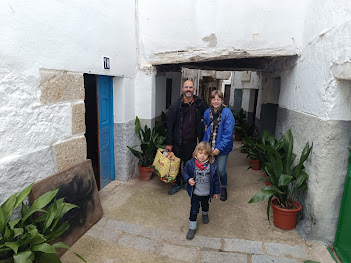
My host family is one of my favourite parts of the past ten weeks. I have been very lucky to be able to live with a Spanish family who have similar allergies to mine, and who take care of me as their own daughter. There are no words to express my gratitude and love. I will always remember them fondly.
- Would you recommend this experience to other foreign students in a similar situation to yours?
Before coming to Spain, I would never think of going to an exchange programme in another country, especially a country where another language is spoken. I didn’t think it was possible, because of my allergies. Now I can’t imagine my life without the experience, which has been amazing despite my allergies. It would be a lie if I said that there weren’t more difficult moments, but the truth is that I have those moments when I am in Minnesota too. I would tell another foreign student that it is worth going to Spain, and that the most important thing is to find a family that can understand allergies, and well, if I have found one, it would be possible for you too.